NAD+ and Glutathione are having a moment in wellness—and for good reason. Both are top-tier molecules for health, offering a range of benefits to help you function at your best.
However, while both are essential for good health, what they do and how they do it differ significantly. They’re not interchangeable; they’re synergistic—like different players on the same team. This is why we’re taking a closer look at what they actually are, what they do and which you should incorporate into your wellness routine.
What NAD⁺ and Glutathione Are (and Why They Matter)
NAD+ and Glutathione are two essential molecules that your body needs to stay fit and healthy.
NAD+ helps your cells to make energy, providing the fuel you need to function. But that’s not all, it also helps repair DNA. Glutathione is like a cleanup crew, helping protect the same cells and detoxify your liver.
As we age, levels of both NAD+ and Glutathione decline, making it harder for our bodies to repair, protect and stay energized.
What Is NAD⁺?
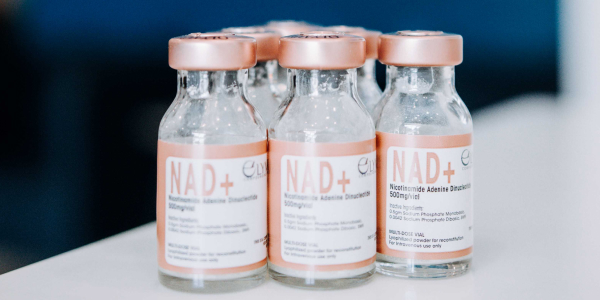
NAD+ (Nicotinamide Adenine Dinucleotide) is a multitasking molecule found in every cell of your body. It helps generate energy, repair DNA and keep your cells in top shape. Basically, it’s the little guy working behind the scenes to keep you energized and healthy.
As we age or face metabolic stress, our NAD+ levels can drop, affecting our energy and overall wellness.1 Maintaining these levels is essential to keeping our bodies functioning as well as possible.
How NAD⁺ Works
Imagine NAD+ as the cell’s trusty courier, delivering essential components to the mitochondria—often called the cell’s ‘powerhouse'—to allow it to perform all its vital functions smoothly. It also acts as a raw material for enzymes that repair damaged DNA and regulate cell health.
But, as NAD+ levels decline with age, it’s important to keep them topped up.1 NAD+ IV Therapy delivers NAD+ directly into the bloodstream, bypassing digestion and providing immediate bioavailability. The aim is to raise NAD+ levels quickly so it can enter cells and get to work.
Potential Benefits
As NAD+ is present in every cell and involved in almost every process, the potential benefits of NAD+ Therapy (and supplementation with NAD+ precursors) are wide-ranging.
It has been linked to increased energy production, improved sleep quality and reduced inflammation.2,3 There is emerging evidence to suggest it may help with mental health support, enhanced cognitive function and skin quality.4,5,6,7
“The important part of NAD+ is that it’s a long game. So when we think about NAD+ Therapy, what you really want to be focusing on is what you'll set yourself up for,” explains Dr. Rachele Pojednic, Chief Science Officer at Restore.
“In five, ten or fifteen years, you can kind of think about it like a 401(k). If you put money in the bank now, you will have exponential growth in the future.”
What Is Glutathione?
Glutathione is a small but mighty antioxidant that works hard to protect the body against oxidative stress.
Like NAD+, Glutathione production can naturally decline with age, as well as chronic stress, pollution exposure and poor diet.8 As Glutathione plays a central role in antioxidant defense and cellular resilience, when levels drop, we can become more vulnerable to oxidative stress, which is linked to inflammation, fatigue and slower recovery.8
As Dr. Rachele explains, “Anytime you have excess stress on your body, Glutathione is going to be a really great tool to help reduce that stress and inflammation.”
How Glutathione Works
Glutathione is produced in the liver and is actually made of three amino acids—glycine, cysteine and glutamic acid—making it a tripeptide. Think of them as a hard-working repair crew, neutralizing free radicals before they can cause damage to the body.
But that’s not all. Glutathione is known as the “master antioxidant” because it not only fights the bad guys but also supports other antioxidants in the body.
Glutathione works with Vitamin C, another antioxidant, helping to restore it to its active form after it has done its job. So, as well as offering protection, it also helps with regeneration.
Potential Benefits
Glutathione is a busy antioxidant, working across the body to support a variety of functions. It’s no surprise, then, that it has been linked to multiple health benefits.
Emerging research suggests that lower Glutathione levels may predict cognitive decline in healthy adults.9
Supporting your body’s natural Glutathione levels and pathways could help support liver function, provide immune support and aid exercise recovery.10, 11, 12
NAD⁺ vs Glutathione: How They Compare
NAD⁺ and Glutathione have different roles in the body, but they’re connected and support each other to do their jobs.
NAD⁺ powers your cells and supports energy and repair, while Glutathione protects your cells from damage and oxidative stress.
Key Functional Differences:
- NAD+: For energy production and DNA repair
- Glutathione: For antioxidant defense (fighting free radicals and regenerating other antioxidants) and detoxification
NAD⁺ vs Glutathione: How They Work
Should You Choose NAD⁺ or Glutathione?
Whether you choose to take NAD+ or Glutathione (or both) depends on your individual wellness goals and journey. Each molecule offers distinct benefits, but when combined, they amplify each other’s impact.
Choose NAD⁺ if You Want To…
- Increase energy production
- Boost metabolism
- Improve mental clarity and focus
- Support healthy aging
Choose Glutathione if You Want To…
- Support detoxification and liver health
- Reduce oxidative stress
- Boost the immune system
Can You Use NAD⁺ and Glutathione Together?
Yes, the two molecules are complementary and work well together. This makes them a great addition to your wellness routine.
NAD+ and Glutathione act like a circular economy. NAD+ helps to make NADPH, which is the energy that keeps Glutathione active. Meanwhile, Glutathione helps reduce oxidative stress, which helps to protect and preserve NAD+. Together, they charge and safeguard cells, allowing them to perform their functions.
Personalize Your Plan at Restore
Whether you’re looking to boost energy or support your immune system, our experts can help you build a personalized plan to reach your wellness goals. Our IV Drip Therapies offer both NAD+ and Glutathione, along with a whole host of other essential nutrients. NAD+ is also available as part of an IM Shot.
Expert Guidance
A Registered Nurse Practitioner oversees the process. You can discuss your health history, wellness goals and any questions you may have about the treatment.
Personalized Dosing
At Restore, we offer personalized dosing designed to suit your individual needs and tolerance. You can also have NAD+ or Niagen (NR), a precursor to NAD+, as an Add-On to other IV Drips.
Membership Value
A monthly membership at Restore provides excellent value, making it easier for you to achieve the consistency and frequency necessary to reach your goals. We offer three membership tiers to suit a range of budgets and schedules.
Members enjoy exclusive discounts of up to 30% on all therapies and packages, as well as universal access to all studios nationwide. This means you can prioritize your wellness wherever you go.
Complementary Therapies
We recommend combining our IV Drip Therapies with other therapies offered at Restore, such as Red Light Therapy, Infrared Sauna or Cryotherapy. Please speak with one of our experts to build a personalized wellness plan that suits your needs.
What to Expect During a Session
As a pioneer in IV Drip Therapy, at Restore, we take pride in our thorough, safe and professional protocols to maximize effectiveness and ensure comfort.
“Each visit begins with a consultation with a Nurse Practitioner, who reviews your health and clears you for treatment,” explains Dr. Rachele. “Once your IV is started, your Nurse monitors you to ensure you’re relaxed and feeling great throughout the session.”
For NAD+ IV Therapy, sessions can take 1-4 hours. Glutathione IV Therapy is typically much shorter, depending on the individual and other nutrients. IM Shots of NAD+/NR tend to take around 5 minutes to administer.
Risks & Considerations
IV Drip Therapy isn’t suitable for everyone and there are some people who should avoid it entirely within a wellness setting. It’s important to discuss any concerns or health issues with a clinician.
For otherwise healthy and suitable adults, there is a possible risk of discomfort with IV Drip Therapy. This includes chest tightness and nausea. Our Registered Nurses monitor clients throughout therapy and take vital signs before each session begins.
NAD+ IV Therapy has been associated with a higher risk of side effects, including flushing, dizziness, chest tightness or nausea. These side effects are typically a result of rapid infusion and can be helped by slowing the therapy, staying hydrated and fasting for a few hours beforehand. For some clients, Niagen (NR) is a preferred alternative, helping boost NAD+ levels in cells with fewer side effects and faster infusion rates than NAD+ IV Therapy.
Ready to Explore NAD⁺ or Glutathione?
NAD+ and Glutathione perform different functions in the body. Neither is “better,” but both are essential for good health and well-being. NAD+ and Glutathione address separate needs and can be complementary, working together to help you reach your goals.
Consult a Restore expert for a personalized plan today.
FAQ’s:
1. What’s the difference between NAD⁺ and Glutathione?
NAD+ and Glutathione perform very different functions. NAD+ powers your cells and supports energy and repair, while Glutathione protects your cells from damage and oxidative stress. They are complementary and even support each other to function—think of them as two very different players on the same team.
2. What does NAD⁺ IV Therapy do?
NAD+ IV Therapy delivers NAD+ directly into the bloodstream, bypassing digestion and providing immediate bioavailability. The aim is to rapidly raise NAD+ levels so it can enter cells quickly.
3. What does Glutathione IV Therapy do?
Glutathione IV Therapy delivers Glutathione into the bloodstream, allowing it to be used immediately. Glutathione is a “master antioxidant”, helping to recycle Vitamin C & E, as well as fighting free radicals itself. This is why you’ll find it in many of Restore’s IV Drips.
4. Can you take NAD⁺ and Glutathione together?
Yes. NAD+ and Glutathione offer different benefits. In fact, they not only complement one another’s functions but also support each other.
NAD+ and Glutathione act as a two-way support system. NAD+ helps produce NADPH (the energy that keeps Glutathione active), while Glutathione helps reduce oxidative stress, which protects and preserves NAD+. They work together to energize and protect cells, enabling them to carry out their functions.


%20A%20Better%20Way%20to%20Give%20Your%20%E2%80%A8Body%20NAD%2B.jpg)