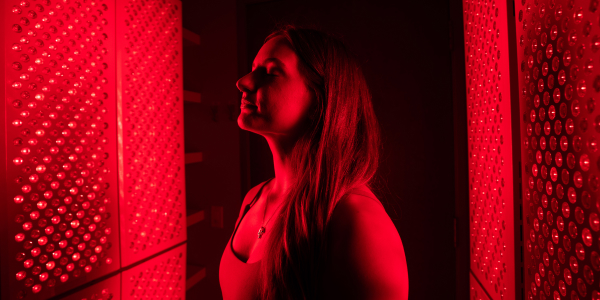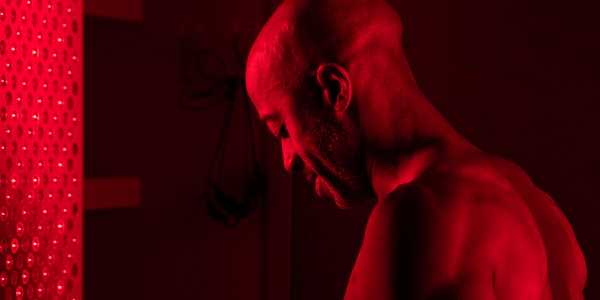

Red Light Therapy uses low levels of red and near-infrared (NIR) light to stimulate mitochondria, enhancing cellular function and repair.
In the 1990s, NASA began using Red Light Therapy to help astronauts heal from wounds, combat muscle atrophy, temporarily reduce their pain and inflammation and relieve muscle spasms. Today, about three decades later, it has gained traction as one of the most effective non-invasive wellness therapies.
Emerging research suggests that a few minutes of exposure every day can provide numerous wellness benefits, including reduced wrinkles, better sleep and improved energy levels. But does Red Light Therapy have a place in your wellness routine? We’ll explore what the science says in this guide.
Highlights
- Red Light Therapy uses red and near-infrared light to stimulate mitochondria and enhance cellular energy.
- Early NASA research and decades of studies show it can support skin health, muscle recovery and wound healing.
- It can reduce inflammation, improve circulation and support joint comfort and mobility. Emerging evidence also suggests potential benefits for mood, energy and overall wellness.
- Clinical-grade therapy with medical oversight delivers safer, more effective results than at-home devices or lower-intensity options.
How Red Light Therapy Works
Because red light and NIR wavelengths penetrate the tissue to different depths, they are used together to achieve multiple benefits in a single session of Red Light Therapy.
Red light can only penetrate the surface layers, around 1-2 millimeters, so it primarily interacts with the epidermis and the upper dermis. That’s why it accounts for most of this therapy's skin health benefits.1
NIR, on the other hand, can penetrate several millimeters to a few centimeters of tissue, depending on wavelength and device power. It activates the mitochondria in the deeper layers of the skin, enabling cellular functions to operate at a higher capacity. This increases cellular energy (ATP) and supports muscle recovery and connective tissue repair.1
Dr. Rachel Pjodenic, Restore’s Chief Science Officer, explains how it works. “The mitochondria have a receptor for the wavelength of light that we know as red light. When we look at the outcomes of Red Light Therapy, including healing wounds, redness and recovery after exercise, they are all directly related to the mitochondria.”
According to Dr. Rachele, the potential of this therapy in physiotherapeutic applications is only beginning to be realized, and the future appears promising. “We're partnering with a group at Harvard that's researching this. It suggests that it could be helpful even for diseases like dementia, Alzheimer's and Parkinson's,” she adds.
Science-Backed Benefits of Red Light Therapy
NASA played a key role in advancing early research on photobiomodulation, partnering with several institutions to conduct multiple studies and clinical trials on its efficacy. Three decades of subsequent research have also contributed to providing a clearer picture of what Red Light Therapy can realistically offer:
1. Supports Skin Health and Collagen Production
Skin health has been a major focus of Red Light Therapy studies over the past 10-15 years, which conclusively suggest that calibrated wavelengths of red light and near-infrared light can significantly rejuvenate the skin. It has demonstrated strong efficacy in reducing fine lines and wrinkles and improving skin texture, with high levels of patient satisfaction.2
If you’ve been to a dermatologist, you’ve likely seen a form of photobiomodulation in action without even realizing it. “The laser that dermatologists use also emits red light. It is just tuned to a much higher intensity than full-body therapies. It definitely improves skin appearance, whether it’s blotchiness, darkness, redness on the face or even wrinkles,” Dr. Rachele adds.
Red Light Therapy delivers the same type of light at a much lower intensity, making it safe for regular full-body use.
How does it work? Red light and near-infrared light both stimulate fibroblasts, the cells responsible for producing collagen and other key proteins in the dermis. These proteins form the skin’s structural framework, giving it strength and elasticity. Increased fibroblast activity also improves collagen synthesis, helping the skin naturally repair and remodel itself.2
Unlike invasive skin procedures, Red Light Therapy doesn’t cause severe side effects like pain, inflammation or prolonged downtime. In fact, it is used to reduce these symptoms after laser or IPL treatments.2
2. Helps Reduce Temporary Inflammation
We discussed how red and near-infrared light stimulate mitochondria—most of the tissue healing that occurs with Red Light Therapy results from this. In that, these light frequencies don’t heal the tissue directly; instead, they nudge your cells to repair themselves more effectively.
Here’s how it works: Cytochrome c oxidase, one of the key components of mitochondria, absorbs the light. This stimulates a small release of signaling molecules, known as reactive oxygen species (ROS). While ROS might sound harmful, in this context, they act as messengers that signal to cells to increase production of antioxidants, such as superoxide dismutase, catalase and glutathione. These have been known to help neutralize excess free radicals and protect cells from oxidative stress.3
“The second you stop the red light, the mitochondria stop producing reactive oxygen species, but the generation of these antioxidants continues to circulate within that cell or even into cells that are adjacent,” Dr. Rachele adds. Over time, higher levels of these antioxidants make cells more resilient, calm inflammation and support tissue repair.
3. May Support Muscle Recovery and Performance
As Red Light Therapy enhances mitochondrial function, it affects all areas that impact athletic performance and post-competition recovery.
First, it increases your energy levels, enabling you to perform at a higher capacity and avoid muscle strain or injury. Plus, it can significantly increase your antioxidant defences and lower markers of inflammation.3
Studies suggest that it can also lower the risk of muscle loss associated with injury and chronic use.4 In NASA’s landmark study, Red Light Therapy was associated with a more than 40% improvement in musculoskeletal injuries.5
The best part is that these benefits are achievable with just 10-15 minutes of regular exposure to Red Light Therapy. If you’re an athlete or active individual who suffers from chronic soreness, it can be an integral part of your recovery plan. Just drop by for a quick session whenever you push extra hard at the gym.
4. Supports Joint Comfort and Mobility
Conditions that cause prolonged pain, like musculoskeletal pain, can severely impact an individual’s overall quality of life.6
Red Light Therapy offers an effective, non-invasive way to reduce the pain intensity in conditions like osteoarthritis, low back pain, non-specific knee pain, fibromyalgia and more.6 This can help reduce dependency on painkillers.
Additional benefits, such as reduced inflammation and improved muscle recovery, may also help improve comfort and restore joint mobility.
5. May Support Mood and General Wellness
Due to its impact on cellular function, Red Light Therapy has whole-body benefits that promote longevity and overall wellness. Research also suggests that an at least 20-minute session of Red Light Therapy can moderately improve mood and reduce depression symptoms in patients suffering from Seasonal Affective Disorder.8
More research is emerging on its impact on mood and mental health, and it’s a promising area.
6. Helps Promote Circulation
Red Light Therapy may help support better circulation by promoting vasodilation, a process in which blood vessels widen and relax.7
Just like photobiomodulation stimulates mitochondria, it also stimulates endothelial cells (the cells that line our blood vessels). Together, these cells and the nearby mitochondria release nitric oxide (NO), which prompts vasodilation. This can allow blood to flow more easily through them.
“Increased blood flow to and from the exposed area ensures that nutrients and oxygen reach the cells that need them while metabolic waste and cellular byproducts are efficiently removed. This circulation boost further supports recovery, regeneration and overall muscle resilience,” Dr. Rachele adds.
How Long Does It Take to See Benefits?
Red Light Therapy works by supporting natural cellular processes, so results typically build over time rather than happen all at once. You may notice immediate effects such as reduced muscle soreness or increased energy, but improvements in skin health, mood or joint mobility typically require consistent use over several weeks. Individual responses can also depend on factors like frequency, treatment area and overall health.
Here’s what you can expect:
Is Red Light Therapy Safe?
Unlike UV radiation, near-infrared rays in Red Light Therapy are calibrated for safety and efficacy. According to the American Academy of Dermatology Association, most people experience no side effects, and those that occur are generally mild (like mild pain or skin irritation).
How Often Should You Do Red Light Therapy?
Typically, 2–5 sessions per week of Red Light Therapy are recommended, depending on the desired health outcomes.
At Restore, we practice a personalized approach to wellness, and our trained experts will take time to understand your current health status and recommend the right number of sessions for you. We encourage you to be open, ask questions and get comfortable before you commit.
Is Red Light Therapy the Same as an Infrared Sauna?
Red Light Therapy and Infrared Sauna both use light beyond the visible spectrum, but they are distinct therapies with different purposes and effects.
Unlike Red Light Therapy, Infrared Sauna uses longer wavelengths that penetrate more deeply. The goal is to raise core body temperature and stimulate heat‑related responses, such as sweating and cardiovascular adaptation. While both can influence circulation and well‑being, their mechanism, cellular stimulation versus heat stress, are not the same.
What Makes Restore Red Light Therapy Different?
Not all Red Light Therapies are created the same. While many devices, such as red-light masks and small gadgets, are available for home use, their intensity is typically much lower than that of clinical solutions. This can lower efficacy, and it may take much longer to see benefits.
Similarly, though many spas and wellness centers offer Red Light Therapy, not all use FDA-cleared, clinical-grade devices or provide medical oversight.
As leaders in the wellness space, we at Restore are committed to upholding the strictest safety standards. That’s why we use only high-quality, clinical-grade equipment to ensure maximum effectiveness.
Our trained experts will take time to explain everything and answer questions before you start. You’ll have a private space where you can disrobe and fully soak in the lights.
Want to take your Wellness Plan to the next level? Consult our Wellness Reps or Registered Nurses to see which therapies can best support your health goals. Evidence suggests that using Red Light Therapy with Mild Hyperbaric Oxygen Therapy can significantly accelerate wound healing and return to pre-injury levels.9 Cryotherapy and IV Drip Therapy also pair well with this routine.
Ready to improve your health on a cellular level? Book a session today.
FAQs
1. What does Red Light Therapy actually do?
Red Light Therapy uses specific wavelengths of red and near-infrared light to penetrate tissue to varying depths. This light is absorbed by the mitochondria, helping them produce more cellular energy. In turn, this activates the body's natural healing mechanisms, helping it repair tissue, reduce inflammation and function more efficiently.
2. Does Red Light Therapy tighten skin?
Red Light Therapy can help improve skin appearance by stimulating collagen production and supporting cellular repair. With consistent use over several weeks, many people notice firmer, smoother skin and a reduction in fine lines and wrinkles.
3. Can Red Light Therapy help with recovery after workouts?
Red Light Therapy is excellent for reducing muscle soreness, supporting tissue repair and improving circulation. Many active individuals report faster recovery and less post-exercise fatigue, especially when sessions are used regularly before or after training.


.jpg)