
Losing weight can be challenging for some people, even with lifestyle changes. If you feel discouraged after trying multiple diets and exercise regimens and not seeing significant results, you are not alone.
Obesity is shaped by a mix of genetics, lifestyle, environment and underlying health conditions.11 These factors can make it harder to lose weight and keep it off, even when one is doing everything right. Many traditional weight-loss methods don’t adequately address the biological factors that play a role in weight gain.
Injectable weight-loss drugs, like GLP-1 receptor agonists, can offer the boost your body needs for healthy weight loss. By addressing underlying factors such as metabolic imbalance and chronic inflammation, they provide an evidence-based solution.2,9
Clinical studies suggest that GLP-1 medication can also improve heart and kidney health, while decreasing the risk of dementia and addiction disorders. 2,3,12
Can it be the right option for you? In this guide, we discuss the benefits and risks associated with GLP-1 Plans so you can make an informed decision.
TL, DR:
- GLP-1 is a hormone released in the body after eating that helps in regulating appetite, blood sugar and energy use.
- GLP-1 medications reduce appetite, increase feelings of fullness and slow stomach emptying. This helps people lose an average of 15–20% of their body weight in clinical trials.
- Most side effects are temporary and mild, such as nausea, vomiting, diarrhea and constipation. Serious risks like thyroid tumors are rare.
- Restore’s GLP‑1 Plans are personalized and clinically supported that combine prescription options, behavior-based lifestyle practices and continuous monitoring. This provides a safe, clinically supervised way to experience the benefits of GLP-1 ito actually further your health goals. There are also complementary Therapies available to Restore clients, such as Infrared Sauna and Cryotherapy, that can enhance results.
What Is GLP‑1?
GLP-1, or glucagon-like peptide-1, is a natural hormone released from the gut after eating. It helps our bodies regulate appetite, energy use and blood sugar levels.13
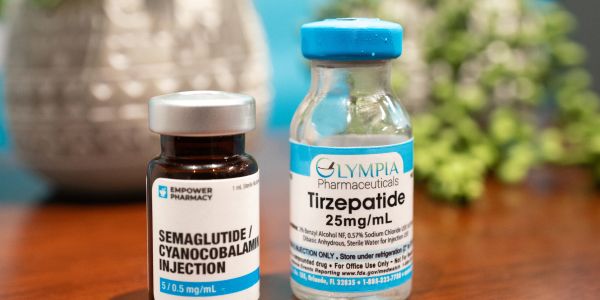
For weight loss and diabetes management, patients are prescribed GLP-1 receptor agonists (GLP-1 RAs) that mimic or enhance the effect of this natural hormone. Variations of GLP-1 drugs exist, but Semaglutide and Tirzepatide are the most common.
Mono-agonists like semaglutide act only on the GLP-1 receptor. Dual agonists, like Tirzepatide, activate both the GLP-1 and GIP (glucose-dependent insulinotropic polypeptide) receptors. As GIP and GLP-1 both support insulin release and fat metabolism, Tirzepatide focuses on activating both pathways together.15
That’s why Tirzepatide leads to greater weight reduction and broader health benefits than targeting GLP-1 alone.16
How Do GLP‑1 Medications Work?
To understand how GLP-1 medication works, we must first examine why our body naturally releases GLP-1.
It triggers the release of insulin after eating, which helps cells take up glucose from the bloodstream for energy.13 It also suppresses glucagon, the hormone that signals the liver to release stored sugar into the blood during fasting periods.13
Additionally, the GLP-1 hormone helps our bodies absorb nutrients more effectively by slowing down the rate at which the stomach empties after eating.13,14 It also sends signals to the appetite-controlling part of the brain that promote fullness after eating.14
GLP-1 medications further enhance the body’s ability to regulate blood sugar and appetite.2 This is why they were first used for the management of type 2 diabetes over 20 years ago.
Studies show that GLP-1 medications help lower blood sugar by 0.8-1.5 percentage points on average. 3 They can moderately lower blood pressure as well, reducing the risk of heart disease.3
How did they start being prescribed for weight loss? As Dr. Rachele Pojednic, Restore’s Chief Science Officer, explains, “In the process of giving this medication to folks with insulin resistance and type 2 diabetes, researchers noticed that it had a pretty unique side effect, which was weight loss. Eventually, the FDA approved GLP-1 drugs specifically for it.”
Science‑Backed Benefits of GLP‑1 Therapy
Since its approval as a drug for diabetes in 2005, GLP-1 has been extensively researched for other applications. Here are some science-backed benefits of GLP-1 RAs:
1. Sustainable Weight Loss
GLP-1 medications have been approved by the FDA for weight loss since 2023 for their impressive efficacy in reducing obesity.2,5 At Restore, we use the same active ingredients as FDA-approved weight loss medication; both have clinically proven weight loss benefits. A study of Restore clients found that individuals receiving compounded semaglutide with cyanocobalamin at commercial wellness studios experienced an average 4.6% body-weight reduction after three months, along with improved body composition—less fat mass and a greater proportion of lean muscle.1
Similarly, in the SURMOUNT-1 trial, participants receiving a weekly dose of Tirzepatide lost 15% to 20.9% of their body weight over 72 weeks. The results varied depending on the dosage given.8
These results are not surprising, given the role the GLP-1 hormone plays in regulating appetite, keeping you full, and reducing blood sugar levels.
Dr. Rachele explains why additional supplementation, such as via GLP-1 medication, is necessary to achieve these benefits. “GLP-1 is only secreted in very small amounts when you eat, with a short half-life as well. In essence, it doesn’t stick around in the bloodstream for that long. These GLP-1 medications are modified to be a much larger dose than you would ever be able to secrete by yourself. Plus, they remain in your system for about a week before it starts to wear off.”
2. Better Glycemic Control & Diabetes Management
An analysis of results from 12 different clinical trials found that GLP-1 RAs are more effective than lowering fasting glucose and HbA1c (blood sugar) levels as compared to other diabetic medications like Metformin.7
GLP-1 medication restored normal blood sugar levels for 76% participants with prediabetes and reduced the risk of developing diabetes by 72%.7
Reducing your body weight by 5% to 7% has been shown to reduce the risk of developing prediabetes in the first place. That’s why GLP-1 is being used for both treatment and prevention of these conditions.7
When combined with healthy lifestyle changes, such as balanced eating and regular exercise, GLP-1 drugs can achieve better prediabetes reversal.7
3. Cardiovascular and Kidney Protection
Aside from established weight loss and metabolic benefits, GLP-1 medication can also directly improve kidney and cardiovascular health.3,4
An analysis of 11 clinical trials involving more than 85,000 people found that GLP-1 RAs reduced kidney disease progression by 18%, kidney failure by 16% and risk of cardiac events by 13%.7 These health benefits were seen in patients with diabetes but also in other adults with overweight who have normal blood sugar levels.7
These benefits are believed to occur because GLP-1 medications lower the levels of inflammatory proteins like C‑reactive protein (CRP) and blood pressure.3,4,10
Chronic inflammation can damage kidney tissue and accelerate the progression of kidney disease, while high blood pressure strains the heart and blood vessels.3,4 Even lowering blood pressure by a few points leads to a dramatic decrease in cardiac events.4
By reducing the strains on both organs, GLP-1 drugs may offer effective protection against renal and cardiovascular diseases.
4. Benefits Beyond Weight & Metabolism
Emerging evidence suggests that GLP-1 RAs may also be beneficial in the management of a multitude of other obesity-related diseases, including metabolic dysfunction-associated steatotic liver disease (MASH), PCOS, Sleep Apnea and Knee Osteoarthritis.2,4
Semaglutide use has been shown to reduce liver inflammation and fat buildup (liver steatosis) in patients with MASH and type 2 diabetes.2 As MASH is also closely linked with obesity and poor metabolic health, GLP-1 can directly address the underlying conditions that worsen liver health. 2,4
In Polycystic Ovarian Syndrome, also known as the “Diabetes of the Ovaries”, GLP-1 can lead to reduced testosterone levels and effective weight loss.17
Both Obstructive Sleep Apnea and Knee Osteoarthritis are also linked to obesity and inflammation.2 As GLP-1 has properties that target both weight gain and inflammation, its use results in improvement of existing symptoms.2
5. Quality‑of‑Life Improvements
Losing weight is one thing, but keeping it off can be an even bigger challenge in the long run. GLP-1 can reduce the risk of regaining weight by regulating appetite and reducing instances of emotional eating.18
As GLP-1 regulates the appetite-control centers in our brain, it may alter food preferences or cravings, reducing the preoccupation with food.19 This can result in a better relationship with food and foster overall healthy behaviors.
Many patients on our GLP-1 Plans report reduced cravings and better control over eating habits.18
Safety Considerations and Challenges
GLP‑1 medications are generally safe and well-tolerated by most people, but just like with other pharmaceuticals, side effects can occur.
Most people experience mild gastrointestinal symptoms, like nausea, vomiting, diarrhea, constipation, or abdominal discomfort.5 These symptoms usually lessen over time as your body adjusts to the dosage.5
In very rare cases, GLP-1 drugs can pose serious gallbladder disease, thyroid cancer and pancreatitis.20
Another concern is that 25-40% of weight lost with GLP-1 RAs may come from lean mass, which can reduce strength and bone density.5 Some people may regain the lost weight within 2 years without simultaneously restoring the muscle mass, leading to a poorer body shape.5
Most of these side effects can be managed with clinical supervision. Customized dosage based on your body’s unique health biomarkers can reduce side effects like nausea. Research shows that combining high-protein diets, resistance and endurance exercise and careful nutrition planning during weight loss can help preserve lean mass and support long-term results.5
Getting Started with Restore’s GLP‑1 Plans
Every GLP-1 plan at Restore begins with a consultation with a licensed Registered Nurse to explore your health goals, followed by a Telemed visit with a Nurse Practitioner who will confirm your eligibility and create a personalized Plan. This Plan may include recommendations for Restore wellness therapies that complement your weight loss journey, such as IV Drip Therapy, Infrared Sauna or Cryotherapy.
Body Mass Index (BMI) is used to determine eligibility for GLP-1 Plans. However, BMI does not differentiate between fat, muscle or bone mass and it doesn’t account for how fat is distributed in the body.
Body composition analysis, by contrast, provides a more detailed view, measuring the proportion of fat, muscle and other tissues to give a clearer picture of your physical health. Select Restore studios offer unlimited body composition analysis with InBody scans, which can further track your progress. For more in-depth analysis, optional blood-based biomarker testing can also be used to measure progress for an additional fee.
Once cleared for a GLP-1 Plan, your medication is prescribed and can either be shipped directly to your home or picked up in-studio, where nursing staff can assist with administration if preferred.
Personalized Dosing and Monitoring
Restore recommends GLP-1 Plans tailored to each client, utilizing the same active ingredients as FDA-approved weight-management prescriptions. Dosing begins low and increases gradually to support comfort and minimize side effects.
As Dr. Rachele explains, “We take a thoughtful approach, starting people on a gentle dose and adjusting as their body adapts. That’s why side effects are typically minimal.”
This gradual, personalized method helps you stay consistent, achieve results safely, and build sustainable habits that support long-term metabolic health.
The Bottom Line
Struggling to lose weight effectively? Our GLP-1 Plans can help you make guaranteed progress and improve your overall cardiovascular, metabolic and renal health.
To see if you’re eligible and learn how these medications can fit into your health plan, book a consultation.
You can also save up to 30% on monthly GLP‑1 medications and other science-backed weight-loss therapies recommended by your registered nurse practitioner with a Restore Membership.
FAQs
1. Are GLP‑1 drugs safe for people without diabetes?
GLP-1 RAs are generally safe for non-diabetic people, particularly those with obesity or overweight who seek weight loss and metabolic benefits.1 They were also approved by the FDA as weight-loss drugs in 2023. Several clinical studies have demonstrated their efficacy in improving overall health and reducing weight in patients without diabetes.1,12
2. How long do I need to take a GLP‑1 medication?
The length of time on a GLP‑1 medication varies from person to person. Many people continue treatment long-term to maintain weight loss and support metabolic health, while others may use it for a shorter period under the guidance of a clinician.
At Restore, a clinician will advise the best approach tailored to your specific needs.
3. How quickly can I lose 20 pounds with GLP-1 drugs?
Results of GLP-1 medication for weight loss vary from person to person, depending on their starting weight, dosage, lifestyle habits and metabolism.
Considering the average results from clinical trials (15-20% weight loss over time), someone with a starting weight of 200 pounds could lose 20 pounds in several months or a year with GLP-1 drugs alone.1
However, as GLP-1 RAs are rarely recommended without additional lifestyle changes or other supporting weight-loss therapies, it’s possible to achieve those results quickly.