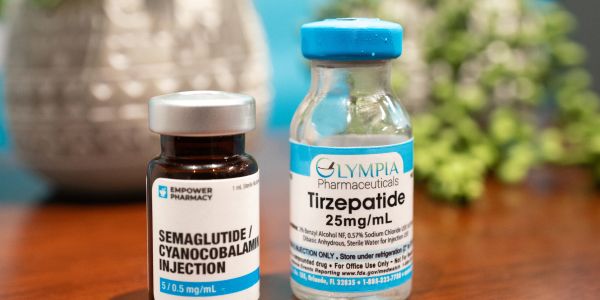
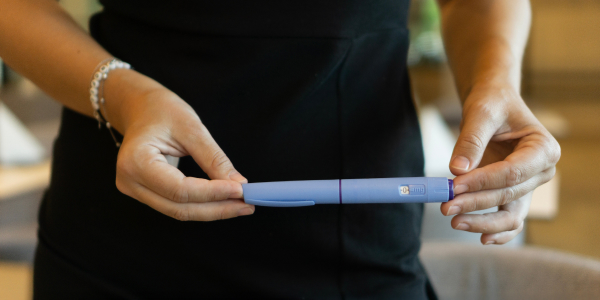
GLP-1 medications mimic the natural action of the gut hormone glucagon-like peptide-1 (GLP-1), which regulates blood sugar levels and appetite. That’s why they are incredibly effective for type 2 diabetes and weight management.1
You may have heard of Ozempic, Monjauro, Zepbound or Wegovy—all brand names for different types of GLP-1 drugs. While often lumped together, they have distinct effects and are FDA-approved for different purposes.
For instance, while most GLP-1 medications are typically prescribed for treating type 2 diabetes, semaglutide and tirzepatide can be safely used by anyone (regardless of diabetes status) for significant weight loss.2
In this article, we’ll thoroughly examine different GLP-1 drugs to help you understand which one might be best suited for your health concerns.
Highlights
- GLP-1 medications work by mimicking a natural gut hormone that regulates blood sugar, appetite and metabolism. This makes them highly effective for diabetes and weight management.
- Single GLP-1 receptor agonists act on one incretin pathway, while dual GIP/GLP-1 agonists target two pathways. This is why the latter results in greater weight loss and metabolic benefits.
- Only a small number of GLP-1 medications are FDA-approved specifically for weight loss—others are typically used for type 2 diabetes management.
- Because compounded GLP-1 medications vary in quality and safety, medical oversight is essential for effective and responsible treatment.
Categories of GLP-1 Drugs
All GLP-1 drugs aim for similar outcomes but differ significantly in other respects. Everything—from how they are administered to how long their effects last—depends on the type of GLP-1 molecule used.
For instance, most GLP-1 medications you may have heard of are administered as daily or weekly subcutaneous injections. Semaglutide is the only one available in oral tablets.1
Depending on the specific molecule’s half-life, GLP-1 medications can also have a short-release or extended-release action, determining how long their effects last in the body. This affects the dosage amount and frequency you are prescribed.1
For instance, exenatide has a half-life of just a few hours, so you’d typically need daily injections.3 This is in contrast with semaglutide, tirzepatide and dulaglutide—all of which have a half-life of several days. In most cases, weekly injections are sufficient.
With numerous criteria to consider, it can be confusing to determine which GLP-1 medication is ideal for each patient. The best way to cut through the noise is to focus on the most important distinction—the biological pathways they engage. Based on this, GLP-1 medications are broadly categorized into:
Single GLP-1 Receptor Agonists
GLP-1 Receptor Agonists (or GLP-1 RAs) activate and bind to the same receptors in the gut, pancreas and the brain that the natural GLP-1 hormone acts on.1
The GLP-1 hormone controls key metabolic processes: it triggers the release of insulin to reduce blood sugar levels after spikes, helps slow down digestion for optimal nutrient absorption and signals the brain when to stop eating. GLP-1 RAs enhance or mimic the same functions in the body.1
Several health conditions, including diabetes and Polycystic Ovarian Syndrome (PCOS), can affect the amount of GLP-1 released in the body or weaken the sensitivity of the receptors it binds to, leading to insulin resistance. This requires treatment with GLP-1 or other hyperglycemic medication to restore optimal metabolic function.3,4
This is why GLP-1 RAs were initially studied exclusively for diabetes management. With time, new use cases emerged. “In the process of giving this medication to folks with insulin resistance and type 2 diabetes, researchers noticed that it had a pretty unique side effect, which was weight loss. Eventually, the FDA approved GLP-1 drugs specifically for it,” Dr. Rachele, Restore’s Chief Science Officer, adds.
Today, several GLP-1 RAs are available in the market. All of them are approved for type 2 diabetes management, and some for weight management.
- Semaglutide (Ozempic, Wegovy, Rybelsus): Probably the most studied and well-known GLP-1 medication. It’s one of the two GLP-1 RAs approved for weight loss by the FDA and the only one approved for treatment of metabolic-associated fatty liver disease (MASH).1,5 Injections are administered weekly, whereas tablets are taken daily.
- Liraglutide (Victoza, Saxenda): Also approved by the FDA for weight loss, but requires daily injections to see results.1 Even when taken daily, it is considered less effective than semaglutide. The STEP 8 clinical trials found that once-weekly semaglutide 2.4 mg led to significantly greater weight loss than once-daily liraglutide 3.0 mg at 68 weeks in overweight adults without diabetes.6
- Dulaglutide (Trulicity): Mainly marketed as Trulicity in the US, dulaglutide has had FDA approval for type 2 diabetes management since 2014. As a long-acting GLP-1 RA, it is administered once per week. In 2020, it became the only diabetic drug to be approved for reducing or preventing the risk of major cardiovascular events (MACE) in patients with type 2 diabetes.7
- Exenatide (Byetta, Bydureon): Primarily used to manage type 2 diabetes, exenatide is available under two brand names in the US. Byetta provides rapid absorption and must be injected twice daily, typically one hour before each morning and evening meal. Bydureon, on the other hand, is injected at the same time weekly.
Dual GIP & GLP-1 Agonists
While Single GLP-1 RAs focus on one incretin pathway (the GLP-1 pathway), Dual GIP and GLP-1 agonists double down by also acting on another pathway involved in glucose regulation and energy balance.8
Just like GLP-1, the GIP (glucose-dependent insulinotropic polypeptide) pathway is activated primarily after meals, but performs different functions. GLP-1 reduces blood sugar by suppressing glucagon, a hormone that signals the liver to release stored glucose into the bloodstream. GIP, in contrast, stimulates insulin release in response to glucagon levels.8
This means that GIP doesn’t necessarily suppress glucagon—it can also use glucagon to produce more glucose when blood sugar levels drop significantly. In that way, it balances the actions of the GLP-1 pathway, ensuring blood sugar levels don’t drop or spike above a certain threshold.8
It is also responsible for determining how fat is metabolized in the liver and how it is stored in the body.8
Why does this matter? Due to their impact on both incretin systems, Dual GIP and GLP-1 agonists like tirzepatide (sold under brand names Mounjaro or Zepbound) are much more effective for weight loss. This is why tirzepatide outperforms semaglutide in most clinical studies.9
How Are GLP-1 Types Used?
Due to their effect on metabolism, GLP-1 drugs show promise in treating numerous health conditions. Research in some areas remains inconclusive, but many therapeutic uses are already well-established. Here is what we know so far:
Type 2 Diabetes Management
GLP-1 medications are approved by the FDA as a second line of defence against type 2 diabetes after the diabetic drug, Metformin. In patients who are not tolerant to Metformin, GLP-1 drugs can be prescribed as an alternative from the start.1
They are also prescribed in cases where Metformin alone can’t produce adequate results. That’s because decades of clinical research have shown that GLP-1 drugs are far superior to other diabetes medications in restoring blood sugar to optimum levels, regulating appetite and reducing blood pressure.1
GLP-1 drugs’ efficacy in preventing the onset of diabetes in patients with prediabetes is also noteworthy—a study suggests that it can lower the risk of developing diabetes by a whopping 72%. Plus, since just 5% to 7% of body weight loss can help prevent prediabetes too, GLP-1 medications are helpful across the whole spectrum—from diabetes prevention to management.10
Weight Management / Obesity
We have already discussed how the GLP-1 hormone affects appetite, fullness and other metabolic processes. GLP-1 medications help with weight loss by enhancing the function of this natural hormone.1
Tirzepatide and semaglutide are the most studied medicines for this purpose, with multiple clinical studies showing impressive results. In the SURMOUNT-1 trials, the tirzepatide group lost about 20.2% of baseline body weight in 72 weeks, while the semaglutide group lost about 13.7 %.11 None of the participants in either group had diabetes.
Other GLP-1 medications prescribed for type 2 diabetes also support weight loss (albeit not as effectively as these two).1
In patients with type 1 diabetes, however, Liraglutide has been most well-researched. Several trials have found that it moderately improves blood glucose levels and can help patients lose up to 5 kgs (about 11 pounds) in 6 months.12
Off-Label and Emerging Uses
Our metabolism affects how much energy we have, how it is utilized and how much of it is stored away for the future. That’s why positively affecting metabolic processes tends to have ripple effects across the body.
It’s precisely why GLP-1 medications are being extensively studied for use cases beyond weight loss and diabetes management.
While the research is still in its early stages, many therapeutic applications already appear promising. For instance, a clinical trial of 11,000 people found that using GLP-1 RAs reduced kidney disease progression by 18%, kidney failure by 16% and risk of cardiac events by 13%.10.
Research also suggests that by facilitating weight loss, GLP-1 medication can indirectly reduce the burden on your other systems—helping to improve symptoms of PCOS, knee osteoporosis, sleep Apnea and even substance use disorders.13
Key Differences Between Types
Still not sure which GLP-1 medication is right for you? This handy comparison table can help:
Types of GLP-1 Medications Used for Weight Management
While all GLP-1 drugs can indirectly support weight loss by acting on the GLP-1 hormone’s pathway and regulating metabolism, only a handful are approved by the FDA solely for this purpose.
The FDA looks for conclusive evidence that these drugs are both effective and safe at treating obesity in people, with or without diabetes. Because these drugs are used at higher doses for weight loss (compared to diabetes management), this is particularly important. Here are the ones that fit the bill so far:
- Semaglutide: For weight loss, 2.4 mg of semaglutide (compared with 1 mg for diabetes management) is typically administered once weekly. In the STEP clinical trials, overweight adults without diabetes lost an average of around 14–15% of their body weight after 68 weeks of treatment. The effects increased with higher doses. In a high‑dose semaglutide trial (7.2 mg weekly), participants lost about 20.7% of body weight in 72 weeks, with a substantial portion achieving up to 25% weight loss.14
- Tirzepatide: Typically, 5-15 mg of tirzepatide is prescribed weekly for weight management. Doses for type 2 diabetes can vary from 2.5 mg weekly up to 15 mg, although high doses are generally uncommon. In the SURMOUNT‑5 trial, participants lost an average of 20.2 % of their baseline body weight over 72 weeks with tirzepatide, with a greater proportion achieving weight-loss thresholds of 15–25 % compared with semaglutide. This can be attributed to its dual action on GIP and GLP-1 pathways. 15
- Liraglutide: For obesity management, liraglutide is prescribed at 3.0 mg daily (vs 1.2-1.8 mg daily for glycemic control). Clinical trials have shown this dose produces significant weight loss over 56 weeks, with many participants achieving 5–10 % of baseline body weight reduction.16
Compounded vs. Brand Name GLP-1 Medications
While several commercial brand-name semaglutide and tirzepatide options are available, specialized pharmacies can also mix or customize the ingredients in these medications. These formulations are known as GLP-1 compound medications. Not only do they offer greater dosing flexibility, but they are also more accessible during shortages of brand-name medications. In some cases, they cost less as well.
That said, GLP-1 compound medications are not FDA-approved in the same way brand-name drugs are. This means that quality, consistency and safety depend heavily on the clinical oversight involved.
At Restore, we take great care to formulate our GLP-1 compound in accordance with stringent safety guidelines.
Not everyone is eligible—before clearing you for a personalized GLP-1 Plan, our licensed Nurse Practitioner will assess your BMI to determine eligibility, as well as review your current health status. They may order additional tests. Lastly, you’ll also receive a free body composition analysis to track your progress along the way.
If you are eligible and enroll in a plan, our Registered Nurse will assist you during each session and adjust dosage as needed.
Ready to lose weight sustainably? You deserve to do it safely in a supportive environment. Try our personalized GLP-1 Plans. Book a session at a studio near you today.
FAQs
1. What does “GLP-1” stand for?
GLP-1 stands for glucagon-like peptide-1, a naturally occurring hormone released in the gut after you eat. GLP-1 helps regulate blood sugar by stimulating insulin release, slowing digestion and signaling fullness to the brain. GLP-1 medications mimic this hormone to enhance metabolic control and reduce appetite.
2. Are all GLP-1 drugs for weight loss?
No. While all GLP-1 drugs influence appetite and metabolism, only some (like semaglutide and tirzepatide) are FDA-approved specifically for weight management. Others are approved for type 2 diabetes and may lead to weight loss as a secondary effect.
3. What’s the difference between GLP-1 and dual agonists?
GLP-1 receptor agonists act on a single incretin pathway—the GLP-1 pathway—to regulate blood sugar and appetite. Dual agonists (GIP/GLP-1 medications) work on two incretin pathways at once. By activating both GLP-1 and GIP receptors, they tend to produce greater effects on weight loss and metabolic health than single GLP-1 receptor agonists.